Improvisation in Jazz: The New Frontier of Music
 Temps de lecture/Reading time : 4 minutes
Jazz has never been a static genre. From its origins in New Orleans to the revolutions of bebop, free jazz, and fusion, it has constantly evolved through cultural blending, disruption, and experimentation. Today, contemporary jazz continues this search for sonic exploration, to the point where the boundaries between composition, free improvisation, electronic music, sound art, and avant-garde experimentation are becoming increasingly blurred.
At a time when digital platforms often standardize musical listening through algorithms and formatted content, a new generation of artists is pushing the limits of jazz language with unprecedented freedom. Contemporary jazz has become a living laboratory where electronic textures, deconstructed rhythms, ambient influences, noise, hip-hop, contemporary classical music, and non-Western traditions intersect.
This evolution does not signal the disappearance of traditional jazz; on the contrary, it demonstrates its remarkable ability to adapt.
Jazz: A Historically Experimental Music
Jazz is often associated with standards, intimate clubs, and virtuosic improvisation. Yet its history is above all the story of constant reinvention.
When Charlie Parker and Dizzy Gillespie invented bebop in the 1940s, many listeners considered the music too complex and chaotic. A few decades later, Ornette Coleman and John Coltrane pushed the boundaries even further with free jazz and modal improvisation.
Jazz has therefore always moved forward by breaking its own rules.
Today, this experimental spirit has reached new territories. Artists are no longer simply improvising over complex harmonies; they are questioning the very notions of musical structure, rhythm, melody, and sometimes even the role of instruments themselves.
Improvisation as a Total Language
Improvisation remains the heart of contemporary jazz, but it is no longer limited to technical virtuosity. It has become a method of collective, real-time creation.
In some modern ensembles, pieces may have no fixed tonality, stable tempo, or predetermined harmonic framework. Musicians respond instead to textures, silence, sonic accidents, or the physical energy of the moment.
Artists such as Kamasi Washington, Matana Roberts, and The Comet Is Coming embody this desire to expand improvisation into narrative, spiritual, and electronic dimensions.
For some musicians, improvisation even becomes a form of meditation or sensory exploration. Concerts turn into immersive experiences where listeners are no longer searching for recognizable melodies, but for sensations, tension, or trance-like states.
The Encounter with Electronic Music
One of the most significant transformations in contemporary jazz lies in its relationship with electronic music.
Long perceived as opposites — jazz associated with organic expression and electronic music with programming — these worlds now merge naturally. Modular synthesizers, digital effects, sampling, rhythmic loops, and real-time processing enrich the vocabulary of modern improvisers.
Artists such as Flying Lotus, Thundercat, and Nubya Garcia constantly move between jazz, beat-making, cosmic music, and experimental sound design.
This hybridization is also transforming the role of instruments:
- drums interact with sequencers;
- double basses are processed through digital effects;
- saxophones pass through distortion pedals;
- computers become improvisational instruments in their own right.
The result is music where the line between a jazz concert and an electronic performance becomes almost invisible.
The Return of Collective and Political Dimensions
Contemporary experimental jazz is also rediscovering a strong social and political dimension.
Historically, jazz has often served as a space for cultural resistance, particularly within African American communities. Today, many artists continue to use jazz to address identity, social inequality, systemic racism, and contemporary crises.
The works of Sons of Kemet and Shabaka Hutchings blend spirituality, African heritage, spoken word, and experimental energy.
Contemporary jazz thus becomes both a space for political reflection and a field of musical research.
This collective approach can also be found in emerging local scenes:
- London and its fusion of jazz, grime, and afrobeat;
- Chicago and its free jazz heritage;
- Los Angeles and its cosmic blend of hip-hop and improvisation;
- Berlin, where the boundaries between contemporary classical music and free improvisation are gradually disappearing.
When Noise Becomes Music
One of the most radical developments in experimental jazz involves the integration of noise and unconventional textures.
Artists now incorporate:
- industrial sounds;
- electronic interference;
- repurposed objects;
- amplified breathing;
- feedback noise;
- field recordings.
This approach is sometimes inspired by musique concrète, noise music, or contemporary art. It can challenge listeners accustomed to more traditional structures, but it also opens entirely new expressive possibilities.
In this context, silence itself becomes an essential musical element. The absence of notes, suspended tension, and sudden interruptions all contribute fully to the sonic experience.
Contemporary jazz no longer seeks only traditional harmonic beauty; it also explores discomfort, fragmentation, and instability.
The Influence of Hip-Hop and Urban Cultures
For several years now, hip-hop has played a major role in the renewal of jazz.
This connection is not new: many rap producers have sampled jazz records for decades. But today, the exchanges are becoming far more organic. Jazz musicians collaborate directly with beatmakers, rappers, and electronic producers.
The album To Pimp a Butterfly by Kendrick Lamar perfectly illustrates this fusion of modern jazz, spoken word, psychedelic funk, and political consciousness.
This influence is also changing how younger generations discover jazz. Many listeners now enter contemporary jazz through experimental rap, lo-fi playlists, or electronic productions before exploring the great historical figures of the genre.
Artificial Intelligence and Improvisation
The emergence of artificial intelligence is also opening new possibilities in experimental jazz.
Some artists are already using generative systems capable of reacting in real time to human improvisation. The computer is no longer simply reproducing patterns; it becomes a creative partner.
This raises several fascinating questions:
- Can a machine truly improvise?
- Does musical emotion require human consciousness?
- Can algorithmic randomness replace artistic intuition?
For many musicians, AI represents less a threat than a new experimental tool. It allows artists to explore structures impossible to create manually or to generate unpredictable interactions.
Jazz, which has always embraced technological innovation — amplification, synthesizers, sampling — seems naturally destined to explore these new frontiers.
A Genre That Has Become Impossible to Define
Today, defining contemporary jazz precisely has become nearly impossible.
Some artists still use standards and traditional structures inherited from the past. Others create works closer to sound installations or experimental performances. Between these extremes lies an infinite range of possibilities.
This absence of boundaries may confuse some listeners, but it also represents the greatest strength of modern jazz: freedom.
Contemporary jazz may no longer be a style identifiable through a fixed set of characteristics. It has become an artistic approach built on:
- listening;
- interaction;
- risk-taking;
- exploration;
- and constant improvisation.
The new frontiers of contemporary jazz reveal a profound transformation in modern musical creation. By merging free improvisation, electronic music, hip-hop, sound art, and digital technologies, musicians are continuously redefining what jazz can be.
Far from being a genre of the past reserved for purists, contemporary jazz now appears as one of the most innovative spaces in modern music. It rejects rigid formats, embraces experimentation, and retains its unique ability to absorb the cultural changes of its time.
In a world saturated with standardized content, this music of spontaneity, unpredictability, and sonic exploration reminds us that there are still artistic territories where error, chaos, and the unknown can become forms of beauty.
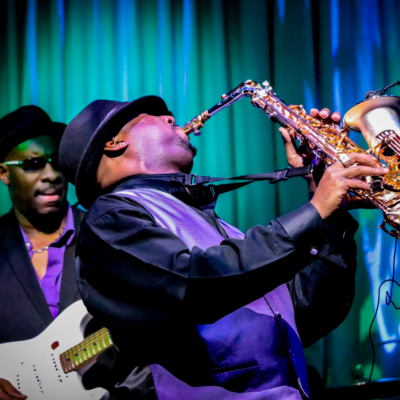
Image by Social Butterfly from Pixabay